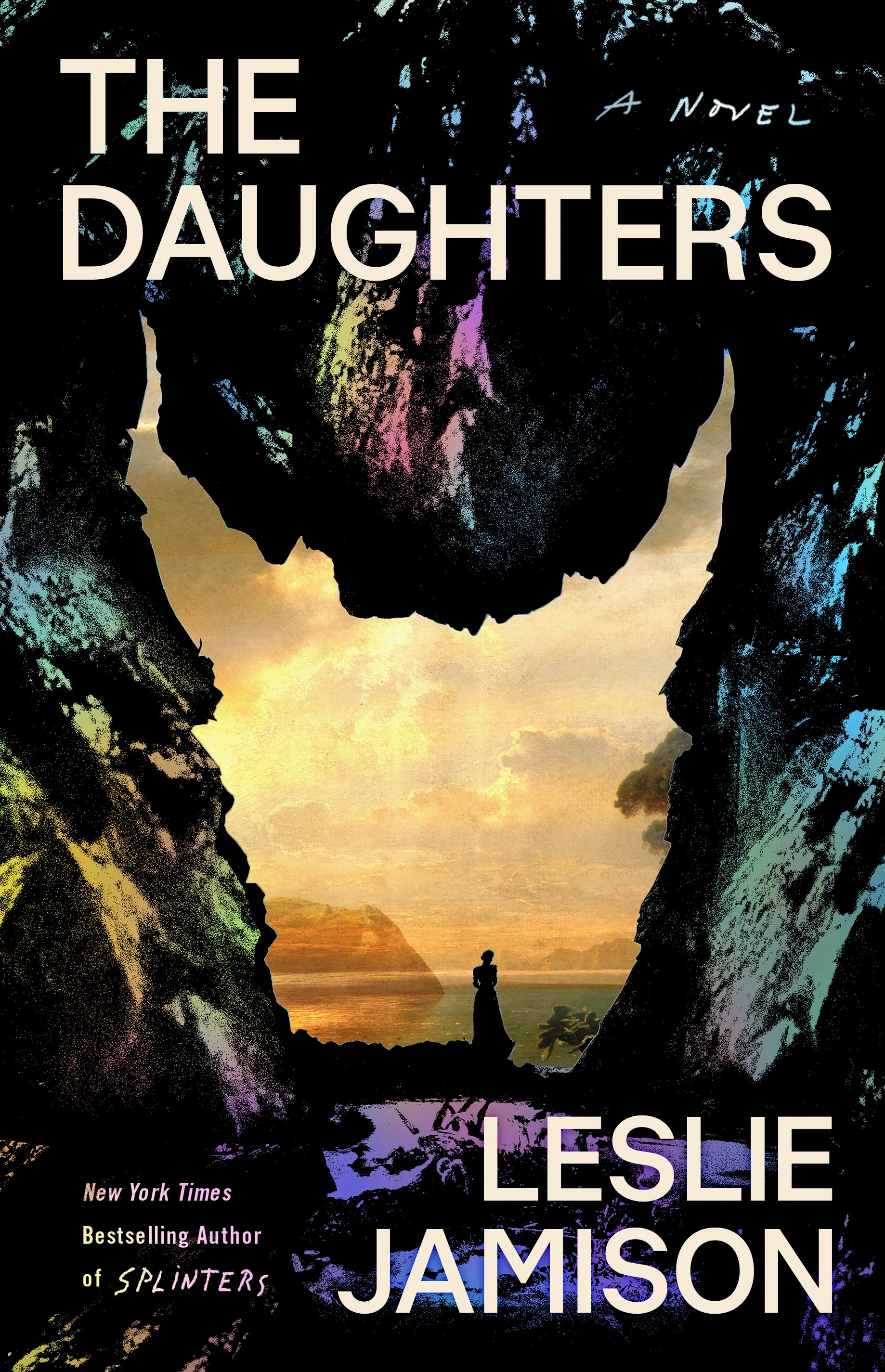
The Daughters
About Leslie
I was born in Washington DC and grew up in Los Angeles. Since then, I've lived in Iowa, Nicaragua, New Haven, and (currently) Brooklyn. I've worked as a baker, an office temp, an innkeeper, a tutor, a juice barista, a GAP clerk, and a medical actor. Every one of these was a world; they're still in me. These days I teach at the Columbia University MFA program, where I’ve been working with our incredible students for more than a decade.
My latest book, a memoir called Splinters, came out in February 2024. I've also written two essay collections—The Empathy Exams and Make It Scream, Make It Burn—a critical memoir (it breaks down genre boundaries!), The Recovering, and a novel, The Gin Closet. I have written for a number of wonderful magazines including Harper's, Oxford American, A Public Space, Virginia Quarterly Review, and The Believer. I am currently a contributing writer at The New Yorker, where my avatar is distinguished by a blindingly large smile (very on-brand) and an orange-slice earring.
Publicity:
Chloe Texier-Rose
Chloe.Texier-Rose [at] hbgusa [dot] com
Literary Representation
Jin Auh:
jauh [at] wylieagency [dot] com
Speaking Engagements
Trinity Ray, Tuesday Agency:
trinity [at] tuesdayagency [dot] com
319-338-7080
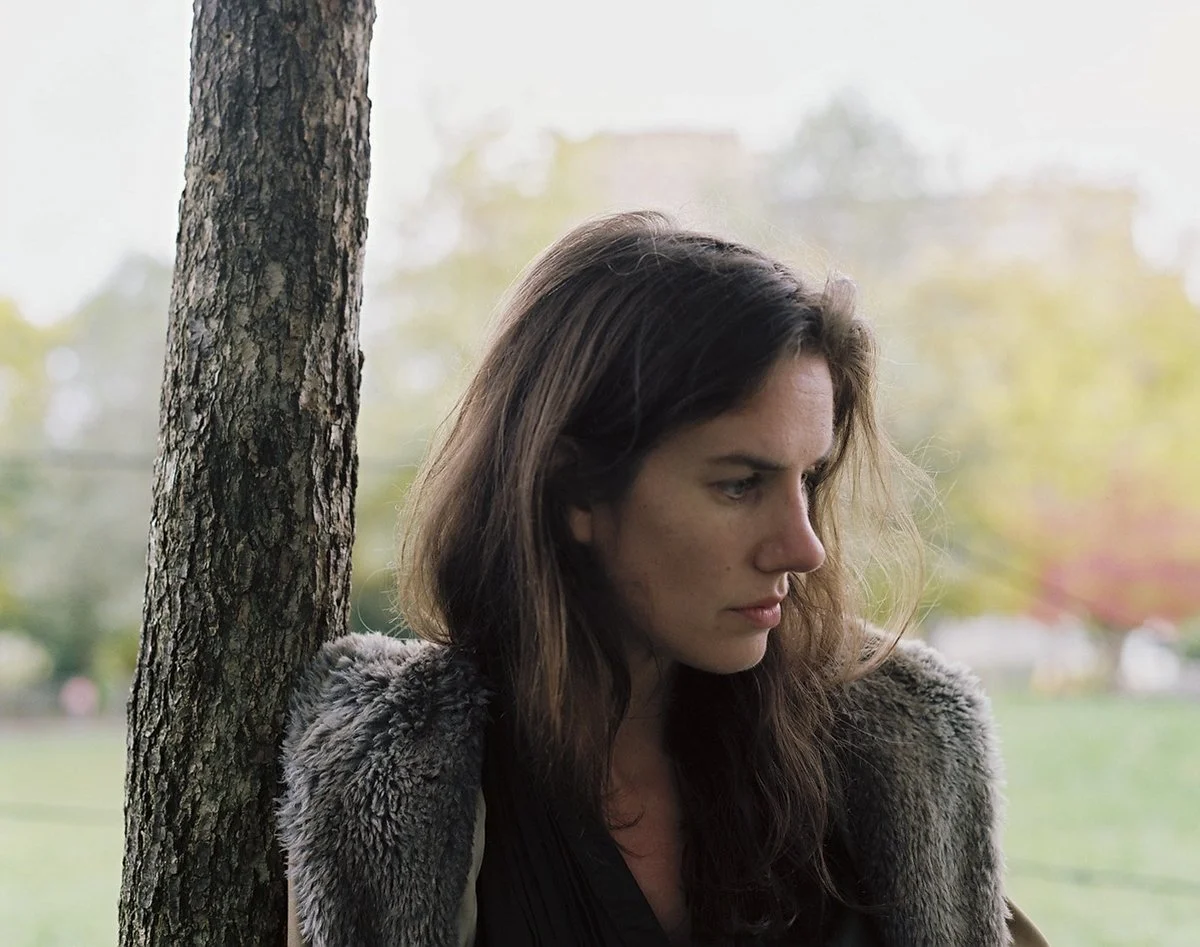
Photo Credit: Beowulf Sheehan
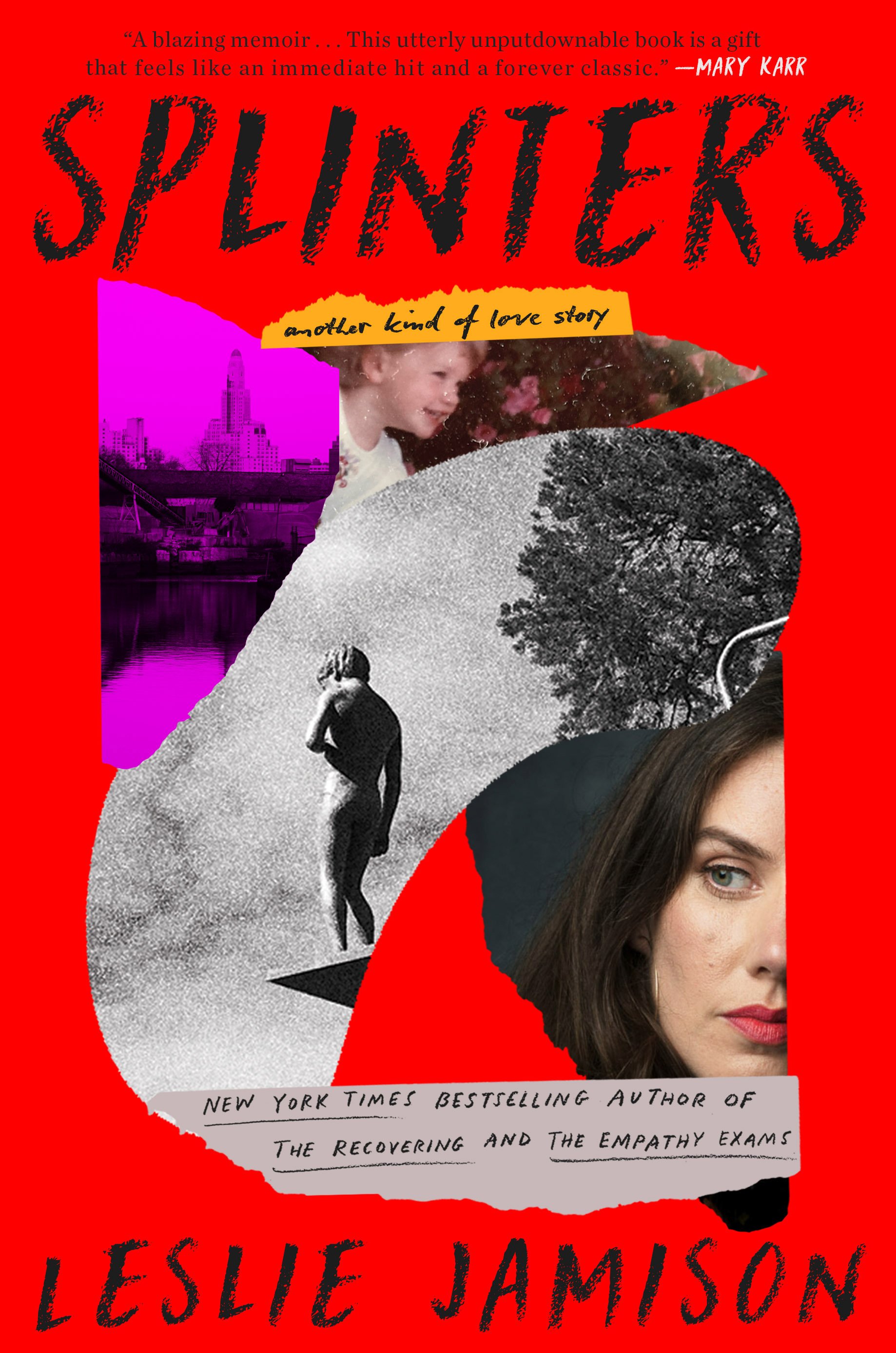
Splinters
From the New York Times bestselling author of The Recovering and The Empathy Exams comes the riveting story of rebuilding a life after the end of a marriage—an exploration of motherhood, art, and new love.
Pre-Order on Amazon
Leslie Jamison is among our most beloved contemporary voices, acclaimed for her powerful thinking, deep feeling, and electric prose. In Splinters, her first memoir, Jamison turns her unrivaled powers of perception on some of her most intimate relationships: new motherhood, a ruptured marriage, and the shaping legacy of her own parents’ complicated bond. In examining what it means for a woman to be many things at once, Jamison juxtaposes the magical and the mundane in surprising ways. The result is a work of nonfiction like no other, a deep reckoning that grieves the departure of one love even as it celebrates the arrival of another.
How do we move forward into joy while haunted by loss? How do we claim hope alongside the harm we’ve caused? A memoir for which the term tour de force seems to have been coined, Splinters plumbs these questions with writing that is revelatory to the last page, full of the linguistic daring and emotional acuity that made The Empathy Exams and The Recovering instant classics. A master of nonfiction, Jamison evinces once again her ability to “stitch together the intellectual and the emotional with the finesse of a crackerjack surgeon” (NPR).
Advance Praise for Splinters
“Leslie Jamison’s blazing memoir kept me riveted for the single day it took to guzzle it down. This wry, hilarious, and unputdownable book is a gift that feels like an immediate hit and a forever classic.”
—Mary Karr, New York Times bestselling author of Lit and The Liar’s Club
“Splinters is as sharp and piercing as its title—a brilliant reckoning with what it means to make art, a self, a family, a life. If I were offered one guide as a writer, as a mother, as a teacher, as a human being constantly reinventing herself out of necessity, I’d want that guide to be Leslie Jamison. This memoir is a masterclass.”
—Maggie Smith, New York Times bestselling author of You Could Make This Place Beautiful
“Splinters is a stunning portrait of the intricate tapestry of human emotions. On every page, in exquisite prose, Jamison unearths moments of luminosity and grace amid pain. Giving language to fundamental experiences of love, grief, and parenthood all too often skirted past, this book is essential reading for anyone who cares about the power of language to help us find solace and recompense.”
—Meghan O’Rourke, New York Times bestselling author of The Invisible Kingdom
“Leslie Jamison’s memoir, Splinters, is a stairway behind the eyes of a woman in the midst of transformation, written so brilliantly, and with such a skilled hand, that readers are likely to find themselves peacefully lost even in its darker moments. These pages are so magnetizing that I wanted to race along, but forced myself to slow down enough to savor the language. No one should be this good at writing. This gorgeous book will blow you away.”
—Ashley C. Ford, New York Times bestselling author of Somebody’s Daughter
“An astonishing achievement. This is a memoir of emotional depth that reminds us of how love, in its fullness, is as much a construction of jagged and flinty edges as it is an ideal of cloudless skies. In Splinters, Leslie Jamison is unstinting in her assessment of marriage gained and lost, of motherhood held close, and of loving oneself in the process, all conveyed with her unsparing and attentive eye.”
—Esmé Weijun Wang, New York Times bestselling author of The Collected Schizophrenias
“Jamison’s genius—a word I use without hyperbole—is her capaciousness, how she gives us the blushing baby and the shitty diapers, the sweeping romances and their residue. We see Jamison half-whirling like Rumi in the throes of ecstatic love for a new daughter, knowing her ecstasy is real because she renders it wholly, alongside the pulverizing lonelinesses of loving deeply. Splinters is a praise song for what remains unannihilated, what has been salvaged from a time—a world—of annihilation. I find in Jamison’s work what I’ve sought my entire life: a rigorous and attentive steward for whom dailiness deepens, instead of diminishes, awe.”
—Kaveh Akbar, author of Calling a Wolf a Wolf
“Christ Almighty this book is good. It’s a masterpiece. No one else I’ve read has captured motherhood—the painful overabundance of it, the extreme delight, the cascading fears—the way Leslie Jamison does in Splinters. No one else I’ve read has evoked so powerfully what it feels like to be pulled by too many competing tethers until you’re half a mother, half a writer, barely a wife, hardly a real person. The electric truth at the heart of this book is that, in this shattering and reassembling, you’re reorganized into a new kind of person, one attuned to abundance, open to chaos and surprise, gratified by the tiny pleasures of being alive. In Splinters, Jamison offers us an emotionally rich odyssey on the terrors and triumph of becoming whole.”
—Heather Havrilesky, author of Foreverland: On the Divine Tedium of Marriage and the “Ask Polly” advice column
“I didn’t realize I needed someone to write this book. As it turns out, I needed Leslie Jamison to write this book. It moved me so much and hooked me so quickly. I absolutely consumed it, this book about hunger and aftermath, about pleasure and beauty and silencing and speaking up, and that new language you get to invent and learn at the same time with your child. Splinters is enormously satisfying—full of passages, images, and ideas that are, quite simply, some of my favorite things I’ve ever read.”
—Mary-Louise Parker, New York Times bestselling author of Dear Mr. You, and Emmy, Golden Globe, and Tony Award winner
“In Splinters, Jamison offers a riveting portrait of rupture that is at once a page-turner about divorce, a romance about parenthood, a mystery of self after splintering, and a promise that however many times we break or are broken, art and love will never fail to mend us.”
—Melissa Febos, author of the National Book Critics Circle Award winner and national bestseller Girlhood
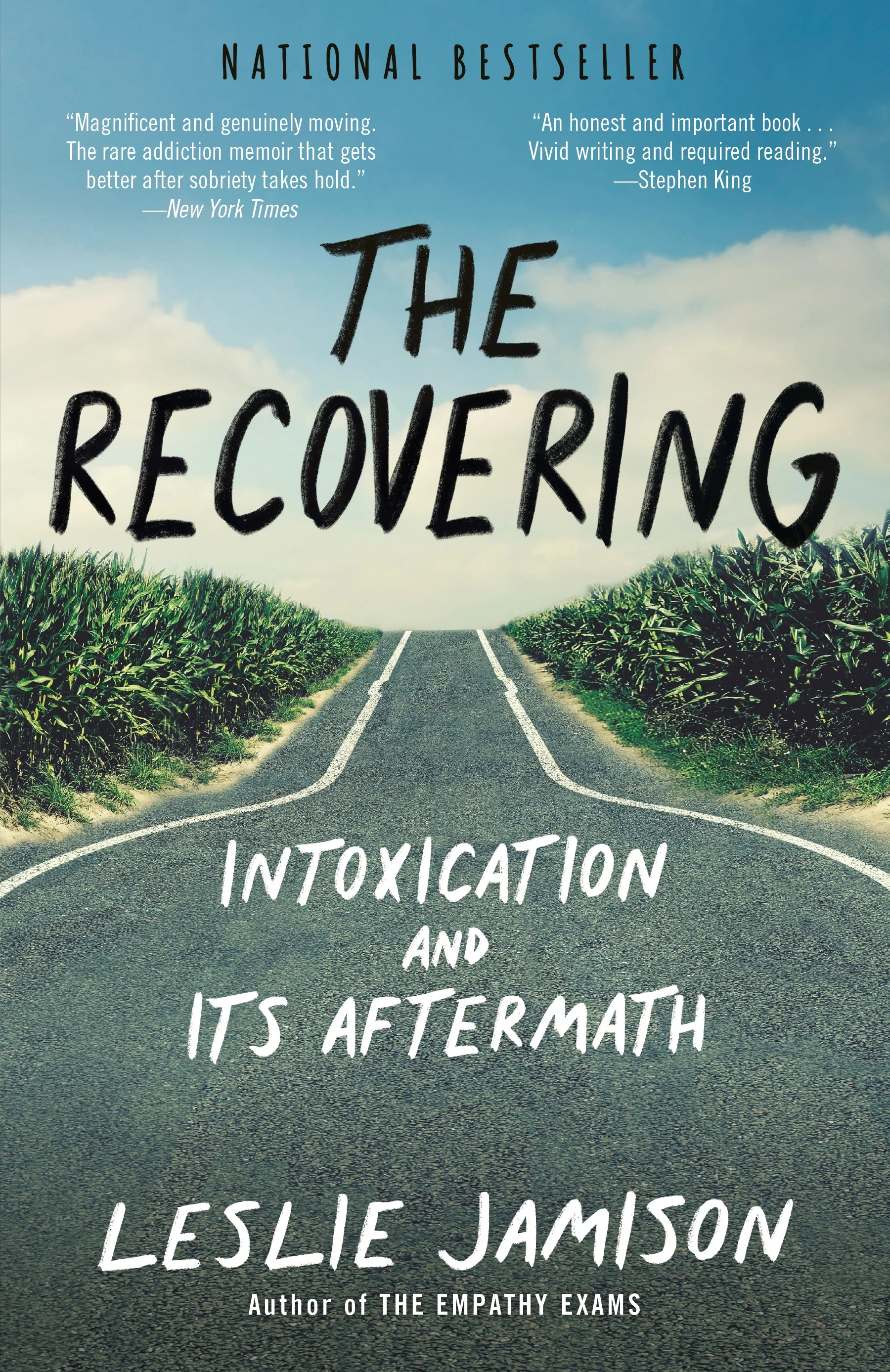
The Recovering
Entertainment Weekly’s #1 Nonfiction Book of 2018!
Literary Hub’s #1 Best-Reviewed Memoir of 2018!
“An astounding triumph....A recovery memoir like no other....Jamison is a writer of prodigious ambition....Here, she’s a bare-it-all memoirist, an astute critic, and a diligent archivist all in one. The book knows no bounds, building in depth and vitality with each passing concern....There’s something profound at work here, a truth about how we grow into ourselves that rings achingly wise and burrows painfully deep.”—Entertainment Weekly
“Magnificent and genuinely moving. This is that rare addiction memoir that gets better after sobriety takes hold.” —New York Times
“Poignant....Taut and immediate.” —Village Voice
“A sprawling, compelling, fiercely ambitious book....Its publication represents the most significant new addition to the canon in more than a decade....Jamison’s writing throughout is spectacularly evocative and sensuous....She thinks with elegant precision, cutting through the whiskey-soaked myths....Jamison is interested in something else: the possibility that sobriety can form its own kind of legend, no less electric, and more generative in the end.”—The Atlantic
“Such is Jamison’s command of metaphor and assonance that she could rivet a reader with a treatise on toast. We perhaps have no writer better on the subject of psychic suffering and its consolations.”—The New Yorker
“Fascinating....energetic, colorful, fun, buzzy, affecting, and spot-on....Emotional, as well as factual, honesty is the sine qua non of a memoir. Yet this kind of deep honesty—the merciless self-examination and exposure that Jamison displays—is increasingly rare.”—New York Times Book Review
“A remarkable feat....Jamison is a bracingly smart writer; her sentences wind and snake, at turns breathless and tense....Instead of solving the mystery of why she drank, she does something worthier, digging underneath the big emptiness that lives inside every addict to find something profound.”—Time
“Riveting....Jamison orchestrates a multi-voiced, universal song of lack, shame, surrender, uncertain and unsentimental redemption....It is a pleasure and feels like a social duty to report that Jamison’s book shines sunlight on these creepy, crepuscular enchantments. Wisdom floods the scene, and genius never flees. Quite on its own terms, The Recovering is a beautifully told example of the considered and self-aware becoming art.” —Boston Globe
“Thoughtful, fiercely honest, and intimate, The Recovering is a must-read that is Jamison at her best.”—BuzzFeed
“Gritty....Raw....Thought-provoking and distinct....Fascinating in ways you might not expect....The Recovering ventures beyond the cliché and the ordinary to remind us once again of both the fallibility and resiliency of the human condition.”
—San Francisco Chronicle
“Precise and heartfelt....The Recovering is a magnificent achievement.”
—Minneapolis Star-Tribune
“Wonderful....wholly original....it shines.”
—USA Today
“As a reader of this most consuming book, I celebrate Jamison’s deep openheartedness, deliberate unselfishness, immaculate, inculcating vision, and her language—oh, her language....For her intelligence, her compassion, her capaciousness, her search, her deep reading, her precise language, Jamison must be honored here.”
—Chicago Tribune
With its deeply personal and seamless blend of memoir, cultural history, literary criticism, and reportage, The Recovering turns our understanding of the traditional addiction narrative on its head, demonstrating that the story of recovery can be every bit as electrifying as the train wreck itself. Leslie Jamison deftly excavates the stories we tell about addiction—both her own and others’—and examines what we want these stories to do and what happens when they fail us. All the while, she offers a fascinating look at the larger history of the recovery movement, and at the complicated bearing that race and class have on our understanding of who is criminal and who is ill.
At the heart of the book is Jamison’s ongoing conversation with literary and artistic geniuses whose lives and works were shaped by alcoholism and substance dependence, including John Berryman, Jean Rhys, Billie Holiday, and David Foster Wallace, as well as lesser-known figures such as George Cain, lost to obscurity but newly illuminated here. Through its unvarnished relation of Jamison’s own ordeals, The Recovering also becomes about a different kind of dependency: the way our desires can make us all, as she puts it, “broken spigots of need.” It’s about the particular loneliness of the human experience—the craving for love that both devours us and shapes who we are.
For her striking language and piercing observations, Jamison has been compared to such iconic writers as Joan Didion and Susan Sontag. Yet her utterly singular voice also offers something new. With enormous empathy and wisdom, Jamison has given us nothing less than the story of addiction and recovery in America writ large, a definitive and revelatory account that will resonate for years to come.
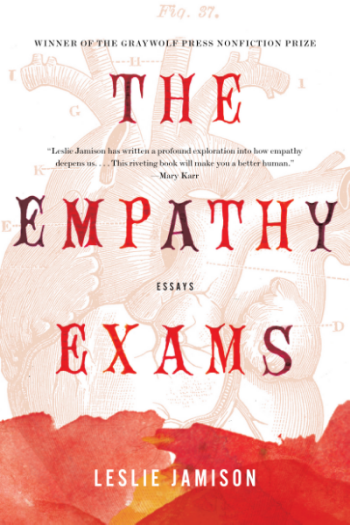
The Empathy Exams
New York Times Bestseller, Notable Book of 2014, and Editors' Choice. Named a Top 10 Book of 2014 by Entertainment Weekly, Publisher's Weekly, Oprah, Slate, Salon, the L Magazine, and Time Out: New York. Finalist for the ABA Indies Choice Award and the PEN/Diamonstein-Spielvogel Award for the Art of the Essay. Published in the UK, Brazil, Germany, Holland, Italy, France, Romania, Spain, Sweden, Korea, and China.
Beginning with her experience as a medical actor who was paid to act out symptoms for medical students to diagnose, Leslie Jamison’s visceral and revealing essays ask essential questions about our basic understanding of others: How can we feel another’s pain, especially when pain can be assumed, distorted, or performed? By confronting pain—real and imagined, her own and others’—Jamison uncovers a personal and cultural urgency to feel. She draws from her own experiences of illness and bodily injury to engage in an exploration that extends far beyond her life, spanning wide-ranging territory—from poverty tourism to phantom diseases, street violence to reality television, illness to incarceration—in its search for a kind of sight shaped by humility and grace.
PURCHASE
“Extraordinary. . . . she calls to mind writers as disparate as Joan Didion and John Jeremiah Sullivan as she interrogates the palpitations of not just her own trippy heart but of all of ours. . . . Her cerebral, witty, multichambered essays tend to swing around to one topic in particular: what we mean when we say we feel someone else's pain. . . . I'm not sure I'm capable of recommending a book because it might make you a better person. But watching the philosopher in Ms. Jamison grapple with empathy is a heart-expanding exercise.” ―Dwight Garner, The New York Times
“Extraordinary and exacting. . . . This capacity for critical thinking, for a kind of cool skepticism that never gives way to the chilly blandishments of irony, is very rare. It's not surprising that Jamison is drawing comparisons to Sontag. . . . There is a glory to this kind of writing that derives as much from its ethical generosity, the palpable sense of stretch and reach, as it does from the lovely vividness of the language itself. . . . It's hard to imagine a stronger, more thoughtful voice emerging this year.” ―The New York Times Book Review
“Jamison writes with sober precision and unusual vulnerability, with a tendency to circle back and reexamine, to deconstruct and anticipate the limits of her own perspective, and a willingness to make her own medical and psychological history the objects of her examinations. Her insights are often piercing and poetic.” ―The New Yorker, "Books to Watch Out For"
“This quirky, insightful collection dazzles.” ―People
“If reading a book about [pain] sounds . . . painful, rest assured that Jamison writes with such originality and humor, and delivers such scalpel-sharp insights, that it's more like a rush of pleasure. . . . To articulate suffering with so much clarity, and so little judgement, is to turn pain into art.” ―Entertainment Weekly, Grade: A-
“A virtuosic manifesto of human pain. . . . Jamison stitches together the intellectual and the emotional with the finesse of a crackerjack surgeon. . . . The result is a soaring performance on the humanizing effects of empathy.” ―NPR
“Extraordinary. . . . Much of the intellectual charge of Jamison's writing comes from the sense that she is always looking for ways to examine her own reactions to things; no sooner has she come to some judgment or insight than she begins searching for a way to overturn it, or to deepen its complications. She flinches, and then she explores that flinch with a steady gaze. . . . [A] beautiful and punishing book.” ―Slate
“A brilliant collection. . . . We're in a new golden age of the essay . . . and in The Empathy Exams Leslie Jamison has announced herself as its rising star.” ―The Boston Globe
“Remarkable. . . . [Jamison] combines the intellectual rigor of a philosopher, the imagination of a novelist and a reporter's keen eye for detail in these essays, which seamlessly blend reportage, cultural criticism, theory and memoir.” ―Los Angeles Times
“A stunning collection. . . . a profound investigation of empathy's potential and its limits.” ―Cosmopolitan, "10 Books by Women You Have to Read This Spring"
“[Jamison] writes consistently with passion and panache; her sentences are elegantly formed, her voice on the page intimate and insistent. Always intelligent, self-questioning, willing to experiment with form, daring to engage with the weird and thrust herself into danger spots, a patient researcher and voracious processor of literature and critical theory, she is the complete package: state-of-the-art nonfiction.” ―Phillip Lopate, San Francisco Chronicle
“[Jamison] writes with intellectual precision and a deep emotional engagement. . . . The Empathy Exams is a gracefully powerful attempt by a tremendously talented young writer to articulate the ways in which we might all work to become better versions of ourselves.” ―Star Tribune
“Jamison is determined to tell us what she sees and thinks without condescension or compromise, and as a consequence her act of witnessing is moving, stimulating, and disturbing in equal measure. . . . Jamison is always interesting, often gripping.” ―Bookforum
“The Empathy Exams is a work of tremendous pleasure and tremendous pain. Leslie Jamison is so intelligent, so compassionate, and so fiercely, prodigiously brave. This is the essay at its creative, philosophical best.” ―Eleanor Catton, author of The Luminaries, winner of the 2013 Man Booker Prize
“Leslie Jamison threads her fine mind through the needle of emotion, sewing our desire for feeling to our fear of feeling. Her essays pierce both pain and sweetness.” ―Eula Biss
“Leslie Jamison has written a profound exploration into how empathy deepens us, yet how we unwittingly sabotage our own capacities for it. We care because we are porous, she says. Pain is at once actual and constructed, feelings are made based on how you speak them. This riveting book will make you a better writer, a better human.” ―Mary Karr
“The Empathy Exams is a necessary book, a brilliant antidote to the noise of our time. Intellectually rigorous, it's also plainly personal, honest and intimate, clear-eyed about its confusions. It's about the self as something other than a bundle of symptoms, it's about female pain and the suffering of solitary souls everywhere, it's an exploration of empathy and the poverty of our imaginations, it's ultimately about the limits of language and the liberating possibilities of a whole new narrative. . . . The Empathy Exams earns its place on the shelf alongside Sontag.” ―Charles D'Ambrosio
“These essays--risky, brilliant, and full of heart--ricochet between what it is to be alive and to be a creature wondering what it is to be alive. Jamison's words, torqued to a perfect balance, shine brightly, allowing both fury and wonder to open inside us.” ―Nick Flynn
“Leslie Jamison positions herself in one fraught subject position after the next: tourist in the suffering of others, guilt-ridden person of privilege, keenly intelligent observer distrustful of pure cleverness, reclaimer and critic of female suffering, to name but a few. She does so in order to probe her endlessly important and difficult subject--empathy, for the self and for others--a subject this whirling collection of essays turns over rock after rock to explore. Its perambulations are wide-ranging; its attentiveness to self and others, careful and searching; its open heart, true.” ―Maggie Nelson
“Leslie Jamison writes with her whole heart and an unconfined intelligence, a combination that gives The Empathy Exams--an inquiry into modern ways and problems of feeling--a persuasive, often thrilling authority. These essays reach out for the world, seeking the extraordinary, the bizarre, the alone, the unfeeling, and finding always what is human.” ―Michelle Orange
“Brilliant. At times steel-cold or chili-hot, [Jamison] picks her way through a society that has lost its way, a voyeur of voyeurism. Here now comes the post-Sontag, post-modern American essay.” ―Ed Vulliamy, author of Amexica: War Along the Borderline
“When we chance upon a work and a writer who summons and dares the full tilt of all her volatile resources, intellectual and emotional, personal and historical, the effect is, well, disorienting, astonishing. We crash into wonder, as she says, and the span of topics Jamison tosses up is correspondingly smashing and wondrous: medical actors, sentimentality, violence, plastic surgery, guilt, diseases, the Barkley Marathons, stylish 'ex-votos' for exemplary artists, incarceration, wounds, scars, fear, yearning, community, and the mutations of physical pain.” ―Robert Polito, from his Afterword
New Yorker
I’m a contributing writer at The New Yorker, where I’ve written about perfectionism, gaslighting, imposter syndrome, Choose Your Own Adventure books, and posthumous collaboration, among other topics. My memoir Splinters was excerpted there and a lot of people had feelings about it! My avatar wears a single lemon-slice earring and is always grinning like a maniac.
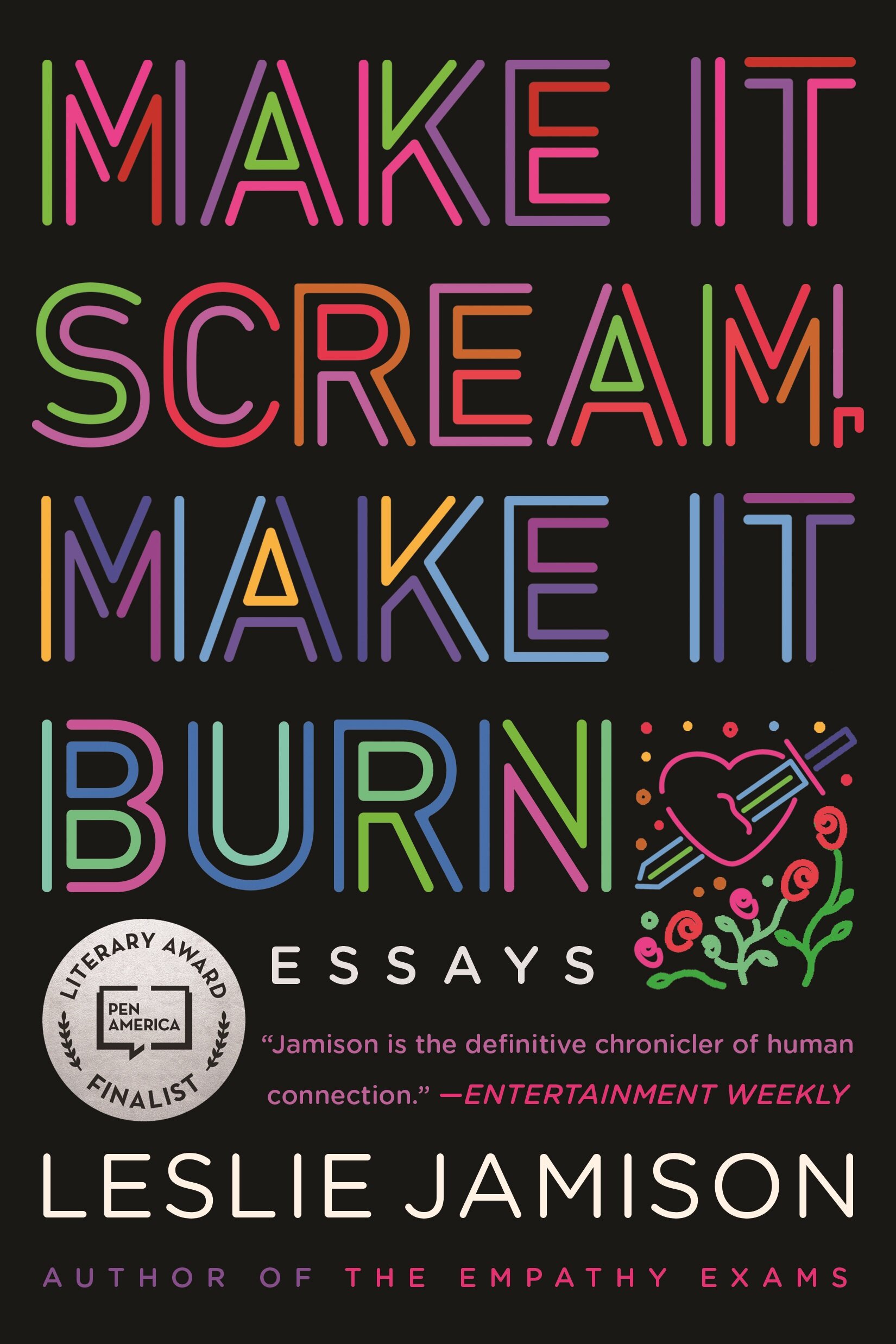
Make It Scream, Make It Burn
Finalist for the PEN/Diamonstein–Spielvogel Award for the Art of the Essay
ONE OF THE FALL'S MOST ANTICIPATED BOOKS: Time, Entertainment Weekly, O, Oprah Magazine, Boston Globe, Seattle Times, BuzzFeed, Newsweek, Bustle, Woman’s Day, Nylon, BookPage, The Millions, Marie Claire, Good Housekeeping, Lit Hub, AV Club, Goop, Book Riot, Pacific Standard, The Week, and Romper.
“Jamison has emerged as a giant in the world of creative nonfiction. She returns with a beautifully compiled collection of essays reflecting on obsession and longing.”—Entertainment Weekly
“This wide-ranging essay collection is insightful and searching, exciting and staggering. Jamison interweaves memoir, journalism, and cultural criticism into essays that explore topics like motherhood, romance, and relationships… Jamison has been compared to such greats as Joan Didion and Susan Sontag, so if you enjoy those, you'll love this one.”—Good Housekeeping
“In her new essay collection, Jamison allows herself to roam beyond the boundaries of one issue, and instead latches her powerful, precise observations to a number of unconventional topics.”—Cristina Arreola, Bustle
"These perceptive essays demonstrate that the best-selling author of The Empathy Exams continues to explore the limits of human connections." --- Elle
"To fortify and enlarge the world through eloquence--apt descriptions of Jamison's new collection...Another wonderful book from this gifted writer." --- The Millions
“Leslie Jamison's astonishingly formidable, restless intellect has gifted us two monumental works of nonfiction: 2014's The Empathy Exams, and last year's The Recovering. Here, she turns her exacting eye on subjects such as the loneliest whale in the world and a Croatian museum filled with the effluvia of failed relationships.”— O, The Oprah Magazine
“If you ever need to be reminded of the potential of the essay and why essay collections matter or if you just want to get excited about one, read Leslie Jamison…In Make It Scream, Make it Burn, three of the most poignant and personal essays come in the final section: one on Jamison’s own marriage…A brilliant exploration of what it means to be a stepmother…and the last, an essay on giving birth that flips back and forth between Jamison’s pregnancy and an eating disorder that marked her earlier experiences of her body.”—Goop
"Illuminating and ruminative...Jamison is positively brilliant when penetrating a subject and unraveling its layers of meaning...Fans of the author's unique brand of perceptiveness will be delighted."
--- Publishers Weekly
“A whirlwind exploration of longing and obsession… How could you not be intrigued?”—Marie Claire
"Richly diverse…The pieces in Make It Scream, Make It Burn are all written with care and intricacy, drawing readers in and making us care…Jamison's observational skills, genuine empathy, and lack of sentimentality create an intelligent blending of journalism, scholarship, and memoir."
--- Pam Kingsbury, Library Journal
"Insightful...The essays in the collection (which can easily be torn through, though should really be savored) contain observations on an eclectic array of subjects...Like the glass in a kaleidoscope, Jamison's fine-tuned attention seems capable of refracting whatever subject it touches. When I finally looked up from the page it was with a renewed sense of wonder."
--- Cornelia Channing, The Paris Review
"Leslie Jamison is a master of blending memoir, criticism and journalism...[her] characteristic fusion of the intellectual and emotional is in full force here, cementing comparisons of her work to that of Joan Didion and Susan Sontag."
--- Christy Lynch, Bookpage
"Even as she documents the experiences of others--Sri Lankan soldiers, Second Life superusers, eminent writers and photographers--Jamison is keenly aware of how her personal experiences shape the way she reports their stories. It's this knowledge that propels the collection, along with her rejection of cynicism in favor of being open to new ideas and experiences, no matter how foreign they may seem."
--- Maris Kreizman, Pacific Standard
"Jamison is one of my favorite working essayists...[In] Make It Scream, Make It Burn [she] dances between the personal, the critical, and the observational, showing her deftness when it comes to each form." --- Jeva Lange, The Week
"Magnetizing and thought-provoking...An edgy spirit of inquiry, a penchant for sharing personal experiences, and incandescent writing skills make Jamison an exciting premier essayist."--- Donna Seaman, Booklist
"Leslie Jamison is a writer of supreme eloquence and intelligence who deftly combines journalistic, critical and memoiristic approaches to produce essays that linger long in the memory." --- LitHub
"Jamison interrogates a variety of fascinating subjects, including her own life, in her praiseworthy second essay collection... Make It Scream, Make It Burn confirms the praise heaped on 2014's The Empathy Exams for her uncanny ability to blend perceptive reportage with intensely personal essays in consistently fresh, dynamic prose.” --- Harvey Freedenberg, Shelf Awareness
MAKE IT SCREAM, MAKE IT BURN is a collection of fourteen essays exploring the dynamics of haunting and obsession. I look at how we are defined by what we can’t ever fully grasp, from the ghosts of possible prior lives to the perpetually unfinished work of documentary art, from the alternate selves of our online avatars to the specters of broken romances. If my first collection of essays, The Empathy Exams, explored the perilous allure of empathy, this collection examines what happens not when we look but when we can’t look away—when we find ourselves consumed by desire or fascination.
The structure of MAKE IT SCREAM, MAKE IT BURN serves as a mirror image to The Empathy Exams. Whereas the latter started with the personal and gradually turned outward, MAKE IT SCREAM, MAKE IT BURN progresses from the outward-looking to the deeply personal. It begins with a trio of pieces of longform reportage: an account of the “loneliest whale in the world” and his devoted followers, an exploration of children who vividly member their past lives, and an examination of those who find community in the virtual world of Second Life. In the pages that follow, it takes readers to Sri Lanka to survey the residue of its Civil War, offers the definitive critical account of an outsider artist’s 25-year documentary photography project on both sides of the US/Mexico border, and ruminates on a museum devoted to the breakups of ordinary strangers. I ultimately turn to the achingly personal, examining my own life as a site of strangeness and mystery, considering the dynamics of obsession, haunting, and longing in essays about weddings, infidelity, elopement in Las Vegas, becoming a stepmother, and my own pregnancy juxtaposed against an eating disorder years before. These are essays about how we are composed by what we long for, and by living in uneasy relation to what we have.
The Gin Closet
AS A YOUNG WOMAN, Tilly flees home for the hollow underworld of Nevada, looking for pure souls and finding nothing but bad habits. One day, after Tilly has spent nearly thirty years without a family, drinking herself to the brink of death, her niece Stella—who has been leading her own life of empty promise in New York City—arrives on the doorstep of Tilly’s desert trailer. The Gin Closet unravels the strange and powerful intimacy that forms between them. With an uncanny ear for dialogue and a witty, unflinching candor about sex, love, and power, Leslie Jamison reminds us that no matter how unexpected its turns, the life we’re given is all we have: the cruelties that unhinge us, the beauties that clarify us, the addictions that deform us, those fleeting possibilities of grace that fade as quickly as they come. The Gin Closet marks the debut of a stunning new talent in fiction.
Finalist for the Los Angeles Times Art Seidenbaum Award for First Fiction. One of the San Francisco Chronicle's Best Books of 2010.
Publishers’ Weekly:
“Starred Review. Jamison's beautifully written debut follows independent young New Yorker Stella and her estranged aunt Tilly as they form some version of a family… The relationship between Stella and Tilly is compelling…what truly drives the novel is Jamison's gorgeous prose.”
Booklist:
“First-time novelist Jamison portrays three generations of ‘wounded women’ in an exquisite blues of a novel…Narrating by turns in each lonely woman’s voice, Jamison creates emotionally complex scenes of harsh revelation in language as scorching as gin…Jamison’s novel of solitary confinement within one’s pain is hauntingly beautiful.”
San Francisco Chronicle:
"The Gin Closet" is no escapist fantasy but a slow and steady heartbreak. It is also exquisitely beautiful. Jamison writes like a poet, her imagery breathtaking, her sentences unfurling unpredictably, to the novel's devastating end… "The Gin Closet" is a classical tragedy. The characters are doomed to repeat their mistakes, haunted by the past, unable to save themselves or each other. But while the plot precludes redemption, language is a saving grace both for the novel and in their lives. We may not be able to change, but at least we can tell our stories, finding flashes of beauty even in the ugliest things.”
Buffalo News:
“Life is raw in Leslie Jamison’s astonishing first novel, a story of love and ruin in the American West…it is a book that finds beauty in dysfunction — and, in doing so, gives us one of the truest and most devastating depictions of alcoholism to be had in some time…“The Gin Closet” is nothing short of a tour de force.”
Vogue:
A “keenly felt” exploration of “love’s more complex geometries.”
New Haven Advocate:
“Jamison's voice is resoundingly unique, her prose both raw and precise, fully attuned to poetry without ever rescinding an energetic narrative impulse… Jamison trusts the consciousness of her characters and her readers. At the very points a lesser writer would stumble, lurch and turn away, she stands still, stares and turns our faces to stare along with her… Of particular importance is the oblique beauty and taut sensuality of Jamison's language and imagery… Jamison is not just marching to the beat of her own drum. She is banging out a brutal, ecstatic symphony upon it. The Gin Closet dares readers to understand how and why we abrade our bodies, ourselves, to manifest the incommunicable to one another.”
Time Out New York:
“Jamison is no coward…she writes courageously about disease, sex and perils of the flesh without flinching… she’ll become a strong voice in contemporary fiction.”
Other writing
You can find my essays at the Virginia Quarterly Review, where I’ve written about my obsession with Disneyland, the lit windows of strangers, and the Museum of Broken Hearts, as well as a little essay called “Grand Female of Female Pain.”
You can find some of my tiny lyric window essays at Orion, as well as an essay about hospitals; and some of my critical writing at the New York Review of Books: on divorce narratives, home movies, and a memoir about a bear that haunts me to this day.